

A garage door off track occurs when the rollers slip out of the metal tracks, and the door can no longer open or close properly. The problem puts immediate stress on the cables, springs, and door opener, and the stress worsens the longer it goes without attention.
Knowing the root cause and appropriate actions can help you determine whether a garage door track repair in Xenia is necessary. This guide covers the most common causes, warning signs to watch for, and steps to take when the problem arises.
What Happens When a Garage Door Goes Off Track?
When a garage door goes off track, the rollers slip out of the metal tracks, and the door loses the guided path it needs to move up and down, putting immediate stress on every connected component.
Here is what happens to the door and its parts when it comes off track:
- Door panels may twist or bend under uneven pressure
- Cables can become slack or snap from the sudden imbalance
- Garage door opener continues to run, but can no longer move the door correctly
- Tracks themselves can warp or pull away from the wall
- The entire door becomes unstable and difficult to control manually
To catch these problems before they escalate into more serious damage, read our guide on Warning Signs Your Garage Door Is Off Track, which covers the most reliable indicators homeowners notice before the situation worsens.
Is It Safe to Use a Garage Door That’s Off Track?
No, using a garage door that has come off its track is a serious safety hazard because the door is no longer supported correctly and can fall or jam without warning.
Here is why it puts you and your property at risk:
- The door is no longer balanced, shifting uneven stress onto the cables and springs
- Automatic opener strains against a misaligned door, which can burn out the motor
- Garage door springs under extreme tension can snap when the door is forced out of alignment
- Bent tracks cause the door to jam mid-operation, leaving your garage exposed
- Every connected component in the system takes on pressure it was not designed to handle
To learn more about the specific risks that come with operating a door in this condition, read our guide on Is a Garage Door Off Track Safe to Use?, which breaks down what homeowners need to know before touching the door again.
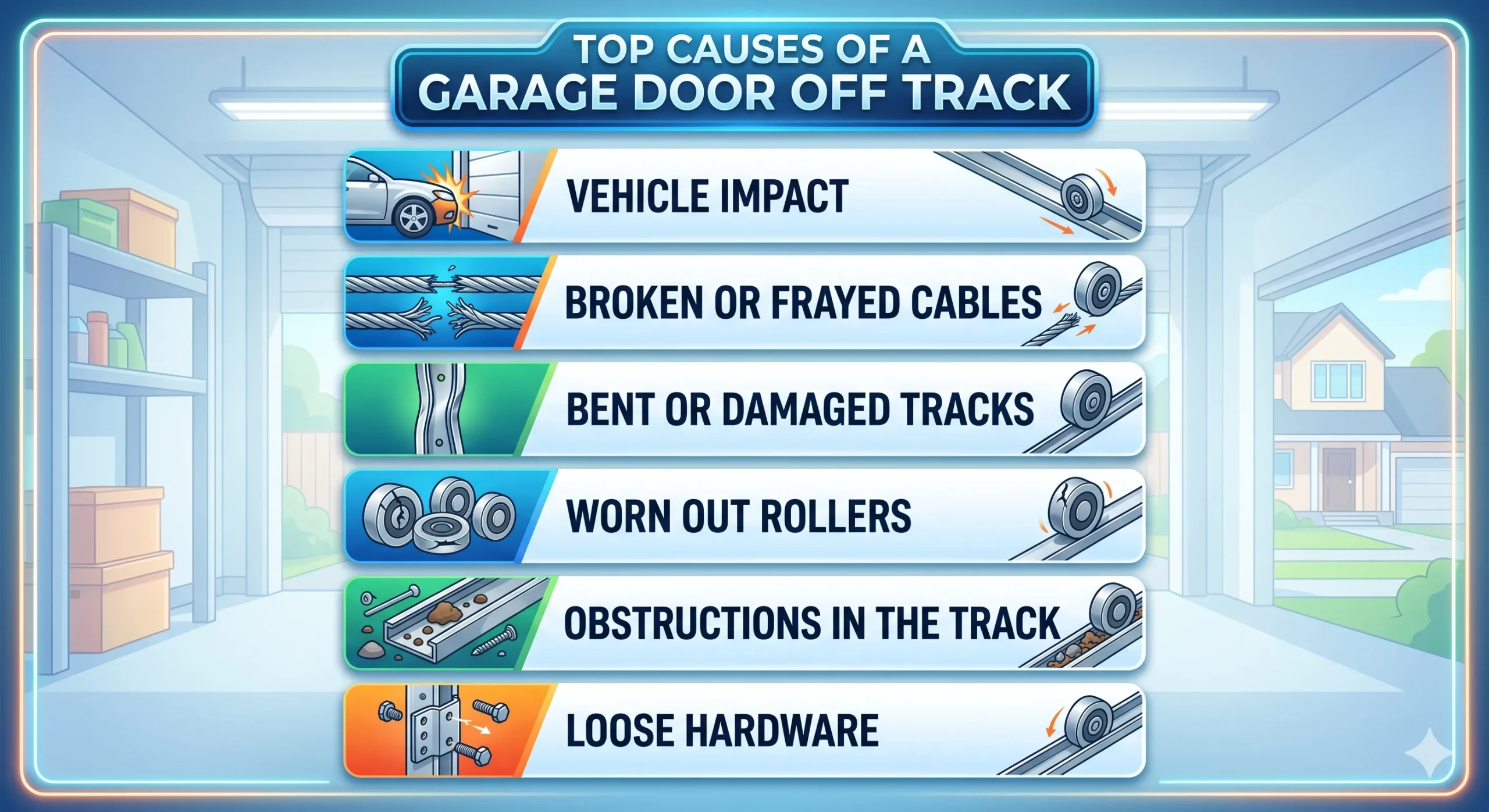
Top Causes of a Garage Door Off Track
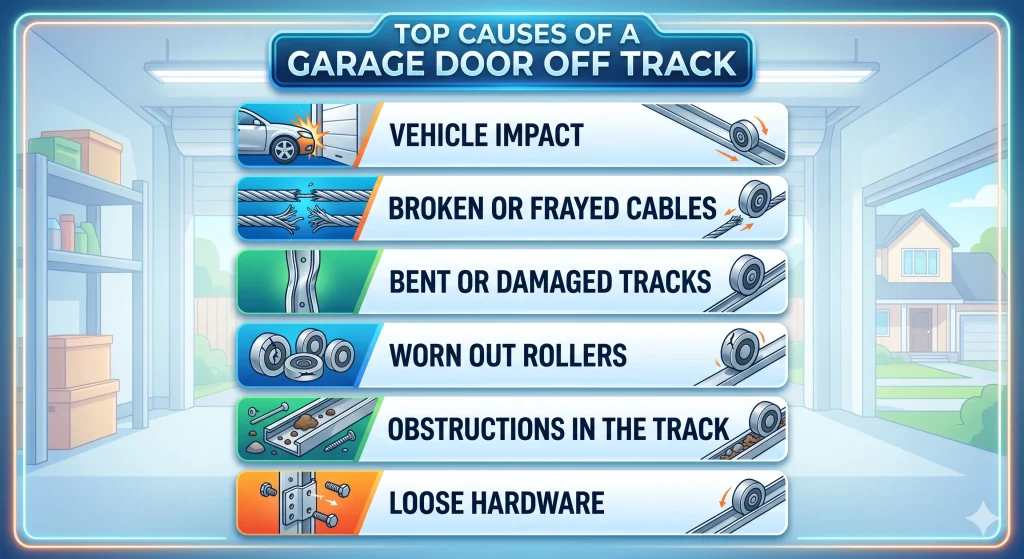
Vehicle Impact
A light bump from a car is one of the most common reasons a garage door ends up off track, pushing the rollers out of position even at low speeds.
Watch for these after any vehicle contact with the door:
- Low-speed impacts can knock rollers out just as effectively as a harder hit
- Force from the collision travels through the panels and directly into the metal tracks
- Damage may not be visible right away, but it worsens with continued use
- Rollers can shift partially out of position without fully derailing the door initially
- Any contact with the door, no matter how minor, warrants a full visual inspection
Always inspect the tracks and rollers thoroughly after any vehicle contact with the door before attempting to operate it again.
Broken or Frayed Cables
Lifting cables on both sides of the door carry the full weight of the panel, and when one snaps or frays, the door becomes unbalanced and pulls off track almost immediately.
Look out for these cable-related warning signs:
- One side of the door sits lower than the other during operation
- Cables appear frayed, kinked, or visibly worn along their length
- A broken spring often contributes, since cables rely on spring tension to function correctly
- A loose or slack cable on one side creates an uneven lifting force
- Fraying spotted at any point along the cable means replacement parts are needed immediately
Cable issues left unaddressed put the entire system under uneven stress, making garage door cable repair necessary before the door pulls fully off track.
Bent or Damaged Tracks
Bent tracks are among the most common causes of a garage door off track situation because rollers cannot stay seated in a warped or damaged channel.
Pay attention to these track-related issues:
- Physical damage from tools, ladders, or accidental impacts can warp the metal tracks
- Temperature fluctuations in Xenia, OH, cause metal to expand and contract, weakening track alignment over time
- The door cannot move along a path that is no longer straight or properly shaped
- Bent sections force rollers to jump out during normal operation
- Alignment issues in the track put uneven stress on the brackets and mounting hardware
Bent or damaged tracks require professional attention, as improper repairs can worsen existing alignment issues.
Worn-Out Rollers
Rollers guide the door through the tracks on every single open and close cycle, and worn-out rollers lose their grip and slip out of the track without much warning.
Keep an eye on these roller wear indicators:
- Cracked or flattened rollers cannot maintain consistent contact with the track wall
- Seized rollers drag instead of rolling, which forces them out of position under load
- Most rollers last between 10,000 and 15,000 cycles before performance drops noticeably
- Older doors are far more vulnerable to roller failure than newer installations
- Wobbling during operation is one of the earliest signs that rollers need attention
Worn rollers that go unaddressed will eventually slip off track, so scheduling a garage door roller repair at the first sign of wear is always the smarter move.
Obstructions in the Track
Dirt, pebbles, or debris inside the track can force a roller out of position, and garages used as workshops or storage areas are especially vulnerable.
Here is what commonly causes obstruction-related track issues:
- Small objects fallen into the track channel go unnoticed until the door hits them
- Grease and dust buildup create resistance that causes rollers to skip or jump
- Tools or hardware stored near the door can fall directly into the track path
- Debris accumulation is more common in garages with heavy foot or vehicle traffic
- Regular garage door maintenance that includes track cleaning prevents most of these issues
Keeping the tracks free of buildup directly supports smooth roller movement and reduces wear on the entire track system.
Loose Hardware
Daily vibrations gradually loosen the bolts and brackets holding the tracks to the wall, allowing them to shift just enough to cause misalignment.
Watch for these signs of hardware-related track shifting:
- Mounting brackets appear slightly pulled away from the wall during a visual check
- Bolts on the track feel loose when pressed or turned by hand
- Rattling sound during operation that did not exist during previous use
- The track has shifted visibly out of its original vertical or horizontal position
- Hardware that has been loose for an extended period may require full track realignment
Tightening the mounting hardware every few months is one of the simplest ways to keep garage door tracks in proper position year-round.
Warning Signs Your Garage Door Is Coming Off Track
Several warning signs indicate a garage door coming off its track, and most of them appear during normal operation before the door fully fails.
Here are the most common signs to watch for:
- Grinding or scraping noises point to a roller struggling inside a bent or dirty track
- The door moves unevenly or appears crooked on one side during operation
- Visible gaps between the rollers and the track wall mean the door is partially off track
- The door feels heavier or slower than usual due to a spring, cable, or roller issue
- Unusual sounds that were not there before often signal a developing track problem
Any of these signs appearing during normal operation indicates the door needs a professional inspection before the situation worsens.
Safe Next Steps When Your Garage Door Goes Off Track
After a garage door goes off track, taking the correct steps right away prevents additional stress on the cables, springs, and opener.
Here are the steps to follow immediately:
- Stop using the door and do not press the wall button or remote under any circumstances
- Pull the red emergency release cord to disconnect the door from the automatic opener
- Keep children and pets away from the garage until the door has been inspected
- Assess the tracks, rollers, and cables visually without touching any of the components
- Attempt a DIY fix only if a single roller has slipped out and the tracks are visibly undamaged
For anything beyond a minor roller slip, reaching out to a garage door repair technician is the most practical course of action.
When to Call a Professional for Off Track Garage Door Repair
Some garage door off track situations involve damage that goes beyond what a homeowner can address without the right tools and training.
Watch for these situations that require immediate professional attention:
- Multiple rollers are out of position, or the entire door has shifted off both tracks
- Tracks are visibly bent, cracked, or pulled away from the wall
- The cable has snapped or is visibly frayed and hanging loose
- Torsion springs are broken or show visible signs of damage
- The garage door opener makes unusual sounds or fails to engage after reconnecting
To determine whether your situation calls for a DIY attempt or a professional, read our guide on Garage Door Off Track: DIY or Call a Pro?, which walks through how to evaluate the damage and make the right call.
How to Prevent Your Garage Door From Going Off Track
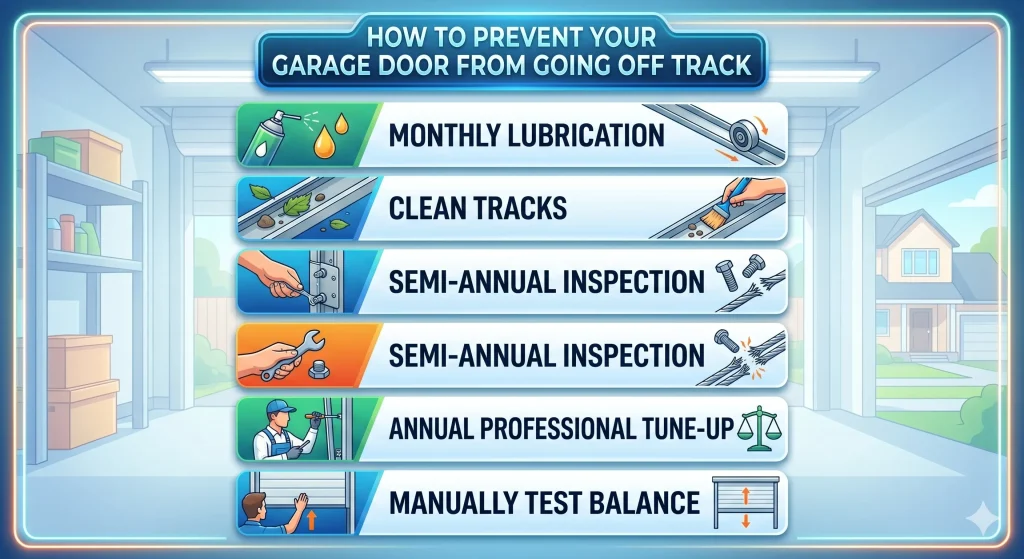
Consistent maintenance habits are the most effective way to avoid dealing with an off track garage door altogether.
Here are the most effective ways to prevent track issues:
- Lubricate rollers, hinges, and tracks monthly using a garage-door-specific lubricant
- Clean the tracks periodically to remove dirt, leaves, and debris that cause rollers to skip
- Inspect for loose bolts, frayed cables, and damaged rollers every six months
- Schedule an annual professional tune-up to ensure the door is properly balanced
- Test the door balance manually every few months by disconnecting the opener and lifting the door halfway to see if it stays in place
Addressing these habits regularly keeps every component in good condition and reduces the likelihood of your garage door coming off its track unexpectedly.
Know the Causes, Take the Right Steps on a Garage Door Off Track
A garage door off track puts immediate stress on the cables, springs, rollers, and opener, and every day it goes without attention adds more strain to the entire system. Whether the cause is a worn roller, bent tracks, or a snapped cable, addressing it promptly protects your home, your vehicle, and everyone who uses the garage.
Dodson Garage Door has been serving homeowners and business owners in Xenia, OH, with residential garage door services ranging from track realignment to full garage door installation. Contact us or give us a call today to speak with a garage door repair expert who will get your door back in proper working order.
Frequently Asked Questions
What are the main reasons a garage door comes off its track?
The most common reasons include vehicle impact, broken or frayed cables, bent tracks, worn-out rollers, obstructions in the track, and loose hardware. We recommend scheduling a regular inspection to catch these issues early.
When should I call a professional instead of trying to fix a garage door off track myself?
Call a professional when you notice broken springs, snapped cables, multiple rollers out of position, or bent track sections. These repairs involve components under extreme tension and require the right tools and training to handle without risk.
Is it safe to use my garage door if one of the wheels has come off the track?
No, it is not. Even if only one roller has come off, the door is no longer balanced and can cause further damage or fall unexpectedly. Disconnect the opener and keep the area clear until the door has been inspected.
What tools do I need to repair a garage door that's off its track?
For minor repairs, you may need a pair of pliers, a rubber mallet, a socket wrench, and safety gloves. Repairs involving springs or cables require specialized tools and should only be handled by a professional garage door technician.
What steps should I follow to get my garage door back on track?
Start by disconnecting the opener using the emergency release cord, securing the area, and visually assessing the damage. For a single slipped roller on undamaged tracks, carefully guide it back into position, and for anything more involved, reach out to our garage door repair service team.
Can a garage door coming off track cause damage to other parts of the system?
Yes, it can. An off track garage door puts stress on the cables, springs, opener motor, and door panels. Continued use without repair can lead to a broken spring, a burned-out motor, or a complete track failure.
How much does it usually cost to repair a garage door that's off track?
Garage door off track repair cost varies depending on the extent of the damage and the parts involved. Minor roller repairs are generally affordable, while jobs involving bent tracks, broken cables, or spring replacement will cost more.
Are there common signs I should look for to prevent my garage door from going off track?
Yes, there are. Watch for grinding noises, uneven door movement, visible gaps between the rollers and track, and a door that feels heavier or slower than usual. If you notice any of these signs and need an inspection, searching for a garage door off track near me can help you find a local technician quickly.
What risks are involved if I try to fix a garage door off track by myself?
DIY fixes on damaged tracks, broken cables, or torsion springs carry significant safety risks. These components are under extreme tension and can cause serious injury if handled incorrectly, which is why professional assistance is always the right move for anything beyond a basic roller slip.