

A garage door off track shows warning signs before the door fully stops working, and those signs appear in the way the door sounds, moves, and looks during operation. Identifying them early can prevent the damage from reaching the cables, springs, and door opener.
Knowing what each warning sign means helps homeowners decide whether a garage door track repair is needed before the problem worsens and affects the entire system. This guide covers every major sign, the cause behind it, and the right action to take when something looks or sounds wrong.
How a Garage Door Falls Off Track and What It Does to the System
A garage door falls off track when the rollers slip out of the metal tracks due to worn components, physical impact, or years of skipped maintenance, and the door immediately loses the guided path it needs to move up and down.
Here is what happens to the door and its parts when it comes off track:
- Door panels may twist or bend under uneven pressure
- Cables can become slack or snap from the sudden imbalance
- Garage door opener continues to run, but can no longer move the door correctly
- Tracks themselves can warp or pull away from the wall
- The entire door becomes unstable and difficult to control manually
To understand what triggers these effects and what to do when they occur, read our guide on Garage Door Off Track: Top Causes and Safe Next Steps, which covers the most common causes before the situation gets worse.
Key Warning Signs of an Off Track Garage Door
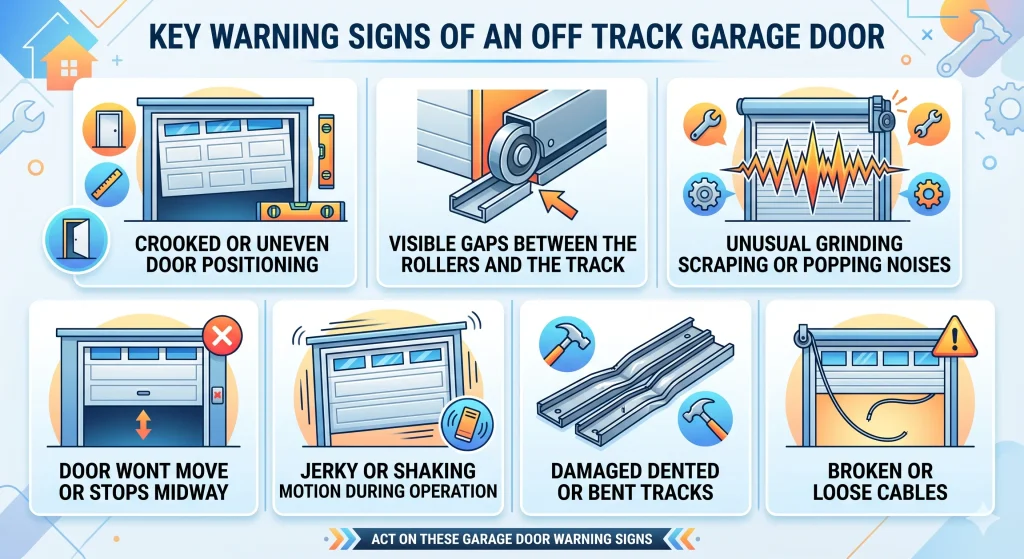
Crooked or Uneven Door Positioning
Crooked or uneven door positioning is one of the first visible signs that a garage door off track problem has already begun within the system.
Watch for these positioning problems:
- One side hangs lower than the other when the door is fully closed
- The door appears tilted when viewed straight on from the outside
- Uneven gaps appear between the door panels and the frame on either side
- The bottom of the door does not sit flush with the ground
- The misalignment becomes more noticeable with each cycle
Uneven positioning signals that the door balance has shifted, and garage door repair is needed before the stress reaches the cables and springs.
Visible Gaps Between the Rollers and the Track
Visible gaps between the rollers and the metal tracks confirm that the door has shifted out of its guided path and is no longer riding the track correctly.
Look for these gap-related signs:
- Space is visible between the roller wheel and the inner wall of the track
- Rollers appear to sit on the edge of the track rather than inside it
- One side shows a greater gap than the other during movement
- The track looks slightly pulled away from the mounting wall
- Roller wheels appear worn, cracked, or flattened on one side
Visible gaps grow wider with each cycle the door completes, pushing the roller further out of position each time the door moves.
Unusual Grinding, Scraping, or Popping Noises
Strange noises during operation are often the earliest indicator that the rollers have begun to lose their position inside the metal tracks.
Pay attention to these sounds:
- Grinding noise occurs consistently when the door opens or closes
- Scraping sounds grow louder as the door travels further along the track
- Popping or snapping sounds happen at specific points during movement
- Rattling comes from the upper corners where the track curves
- A squealing sound appears that was not present during the previous operation
Rollers struggling through bent tracks or loose hardware rubbing against the metal tracks are the most common sources of these sounds.
Door Won’t Move or Stops Midway
A garage door that refuses to complete its travel cycle is showing a clear mechanical sign that something inside the system is blocking smooth movement.
Notice these movement-related warning signs:
- The door begins to open, then stops abruptly at the same point every time
- Reversal happens without any input from the remote or wall button
- The opener motor runs and hums, but the door does not respond to the cycle
- The door feels significantly heavier than normal during manual operation
- Movement stalls consistently at one specific height during travel
Rollers wedged against the door frame will keep the door from completing its cycle until garage door roller repair restores the guided path the door needs to move.
Jerky or Shaking Motion During Operation
Jerky or shaking motion during operation is a reliable sign that the rollers, tracks, or springs are no longer working together to support smooth movement.
Look for these motion-related warning signs:
- The door shakes side to side as it travels along the track
- Jumping or skipping motion is visible during the first few inches of travel
- Vibration is loud and felt through the wall during opening or closing
- Movement feels uneven compared to how the door operated previously
- Shaking intensifies as the door travels higher along the vertical track
Worn rollers and bent track sections are the leading causes of jerky door motion and place extra strain on the springs and opener with every cycle.
Damaged, Dented, or Bent Tracks
Bent tracks are among the most direct causes of an off track garage door, and visible damage to the metal rails confirms that the system needs professional attention.
Inspect the tracks for these specific damage indicators:
- Visible dents or curves appear along the vertical or horizontal track sections
- Track has pulled away from the wall at one or more mounting points
- Mounting brackets look bent, loose, or separated from the wall
- Flat spots are visible where the track should maintain a consistent curve
- Damage is concentrated near the bottom of the track, where impact is most common
Even minor dents in the track create resistance points that force rollers out of position, making the entire door system work harder with every cycle.
Broken or Loose Cables
Garage door cables work alongside the springs to keep the door balanced, and any sign of cable failure means the door has already lost a critical part of its support system.
Watch for these cable-related warning signs:
- One side of the door drops lower than the other suddenly during operation
- A cable is visibly hanging loose or coiled on the floor near the bottom bracket
- Fraying, kinking, or snapping is visible near the cable drum at the top
- The door tilts dramatically to one side when the opener attempts to run a cycle
- The opener motor activates, but the door barely lifts or moves unevenly
Visible cable damage means garage door cable repair is urgent because torsion springs operate under extreme tension that no untrained person should handle.
What Causes a Garage Door to Go Off Track?
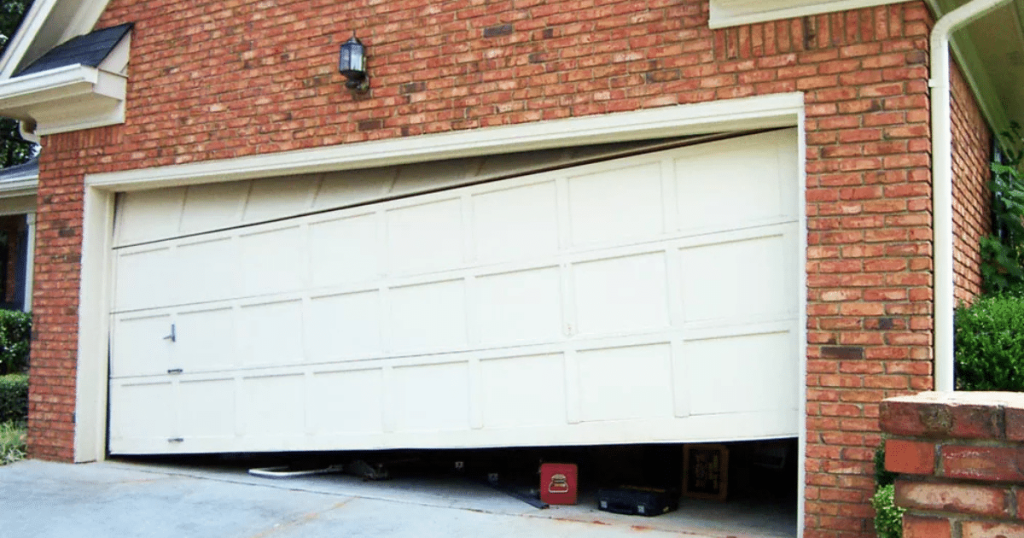
An off track garage door always has a root cause, and understanding what triggered the problem helps determine the most accurate repair approach.
Common causes include:
- Worn rollers that can no longer hold their position inside the track
- Physical impact from a vehicle or object that bends the track out of alignment
- Cable or spring failure that removes the counterbalance, the door needs to move evenly
- Loose mounting hardware that allows the track to shift away from the wall
- Skipped maintenance that allows minor wear to build up undetected across multiple components
A garage door technician uses the cause to determine the extent of the damage and identify which parts need attention.
What to Do Right Away After Spotting the Signs
Taking the wrong action after noticing warning signs of a garage door off track can turn a manageable repair into a much larger one.
Here is what to do immediately:
- Stop operating the door the moment something looks or sounds wrong
- Do a visual check of the tracks, rollers, and cables from a safe distance
- Disconnect the emergency release cord to prevent the opener from running further cycles
- Keep children and pets away from the door until a technician has inspected it
- Contact a professional garage door repair service to schedule an inspection
To determine whether the door is still usable after these steps, read our guide on Is a Garage Door Off Track Safe to Use?, which covers every condition homeowners need to check before operating the door again.
When to Call a Professional for Garage Door Off Track Repair in Xenia, OH
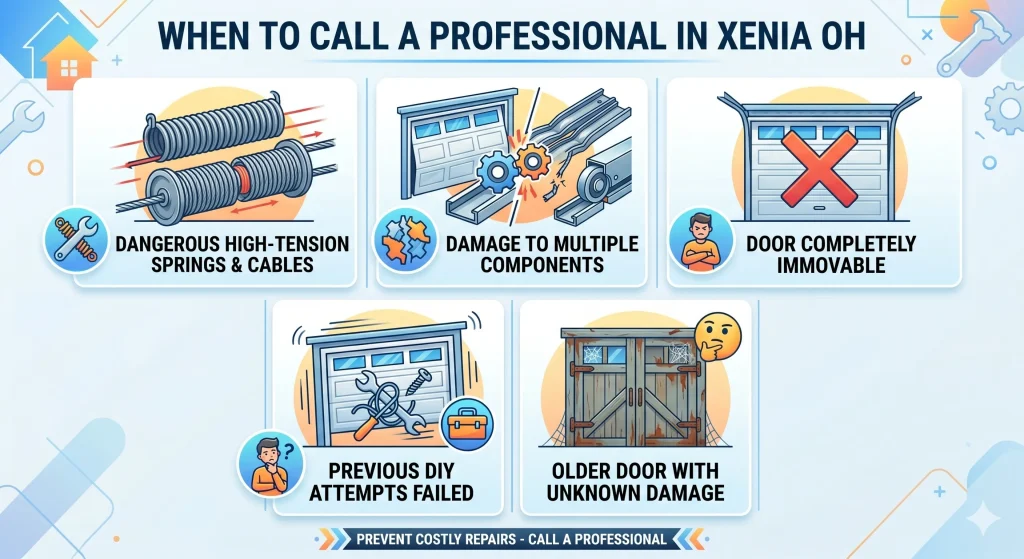
Certain garage door off track conditions go beyond basic precautions and require a professional to intervene before the damage spreads.
Call a professional when:
- The repair involves torsion springs or cables that operate under extreme tension
- The damage affects multiple components at the same time
- The door is completely immovable, and manual operation is not possible
- Previous DIY attempts have made the misalignment worse
- The garage door system is older, and the extent of the damage is unclear
To find out what factors distinguish a professional repair from a homeowner fix, read our guide on Garage Door Off Track: DIY or Call a Pro?, which covers every condition that determines the right call.
Maintenance Tips to Avoid Future Track Problems
Regular garage door maintenance is the most effective way to keep the tracks, rollers, and cables in good working condition and avoid repeat off track problems.
Simple maintenance habits to follow:
- Visually inspect the tracks and rollers every few months for wear, gaps, or damage
- Properly lubricate the rollers, hinges, and springs with a silicone-based product every six months
- Tighten loose mounting brackets and hardware before they shift the track out of position
- Keep the tracks clean and free of dirt and debris that can slow roller movement
- Schedule a professional tune-up once a year to catch problems that are not visible to the naked eye
A consistent maintenance routine extends the life of the entire system and reduces the likelihood of an unexpected garage door off track problem.
Act on These Garage Door Warning Signs Before They Get Worse
The warning signs of a garage door off track are the system telling you that something has already shifted out of place and needs immediate attention from someone with the right knowledge. Ignoring them gives the damage more time to spread across the cables, springs, and opener until the door stops working entirely.
Dodson Garage Door provides expert garage door repair services to homeowners across Xenia, OH, and our team brings the knowledge and experience needed to restore your door to smooth operation. Contact us or give us a call, and let us handle the repair before the damage reaches more components.
Frequently Asked Questions
How quickly can an off track garage door get worse?
Warning signs can progress within days depending on how frequently the door is used, and a door that shows one indicator today can develop multiple issues within a week. Searching for a garage door off track near me can help you find a qualified technician before the problem reaches components that are more expensive to repair.
Does an off track garage door always show visible damage?
No, not always. Some indicators appear in how the door sounds or moves rather than in visible damage, which is why paying attention to changes in noise and motion is just as important as looking for physical signs of wear.
Can a brand-new garage door go off track?
Yes, it can. Improper installation is one of the leading causes of early track problems, and a new door that shows uneven movement or strange noises should be inspected by the installing company right away.
Is there a difference between a single-panel and a sectional garage door going off track?
Yes, there is. A single-panel door tends to show alignment issues across the entire door surface, while a sectional door may show problems in one specific panel or hinge point, making the source easier to isolate during an inspection.
What does it mean when only one side of the door is affected?
One-sided problems point to a localized issue on that half of the system, such as a worn roller, a loose cable, or a bent track section that has not yet affected the opposite side. Getting it inspected early prevents the imbalance from spreading to the rest of the door.
How does garage door off track repair cost get affected by delayed action?
The longer the problem is left unaddressed, the higher the garage door off track repair cost becomes, as damage spreads from the original problem area to the cables, springs, and opener over time.
Can an off track garage door damage the door panels?
Yes, it can. Uneven pressure from a misaligned door forces the panels to absorb stress they were not designed to bear, leading to bending, warping, or cracking along the panel edges and hinges over time.
What is the first thing a technician checks on an off track garage door?
A technician first checks the condition of the rollers and tracks because those two components are the most common starting point for an off track garage door problem and reveal the most about what caused the misalignment.
How do I describe the problem accurately when calling for help?
Describe where the problem appears, what the door sounds like, which side looks uneven, and when the issue first started. Looking up off track garage door repair options in your area beforehand also helps you ask the right questions when you call.