

A garage door off track is more than a mechanical problem because it poses real dangers to anyone who uses the garage daily. The risks range from a sudden door collapse to a full system failure, and they worsen the longer the door remains in that condition.
Understanding those risks helps people make the right call about whether to attempt a garage door track repair on their own or reach out to a professional who can fix it correctly. This guide breaks down every danger, warning sign, and important action to take when a garage door goes off track.
What Causes a Garage Door to Go Off Track?
A garage door goes off track when the components that keep it aligned and balanced start to fail, and once that happens, the door loses the structural support it needs to move safely along the metal tracks during every open-and-close cycle.
Here are the most common reasons a garage door ends up off track:
- Worn-out or damaged rollers cause the door to slip out of its guided path
- Bent or misaligned tracks from physical impact or skipped maintenance push the door off course
- Broken cables or springs create an imbalance that forces the door to derail
- Loose hardware on brackets and hinges lets the system shift out of alignment
- Temperature fluctuations in Xenia, OH, cause metal tracks to expand and contract out of position
To understand how each of these causes develops and what happens when they go unaddressed, read our guide on Garage Door Off Track: Top Causes and Safe Next Steps, which covers how these problems start and why they escalate.
Warning Signs Your Garage Door May Be Off Track
A garage door off track will almost always show physical and audible warning signs before the problem reaches complete system failure.
Here are the most common warning signs to watch for:
- Grinding or scraping sounds mean the rollers are dragging against damaged tracks
- A crooked or uneven door points to a cable, spring, or track issue
- Visible gaps along the door frame mean the door has shifted out of position
- The door struggling to open or close signals an obstruction or imbalance in the system
- The opener straining louder than normal means the motor is fighting resistance it was not built to handle
To catch these signs before they lead to bigger damage, read our guide on Warning Signs Your Garage Door Is Off Track, which covers what each signal means and the right action to take.
Is It Safe to Use a Garage Door That Is Off Track?
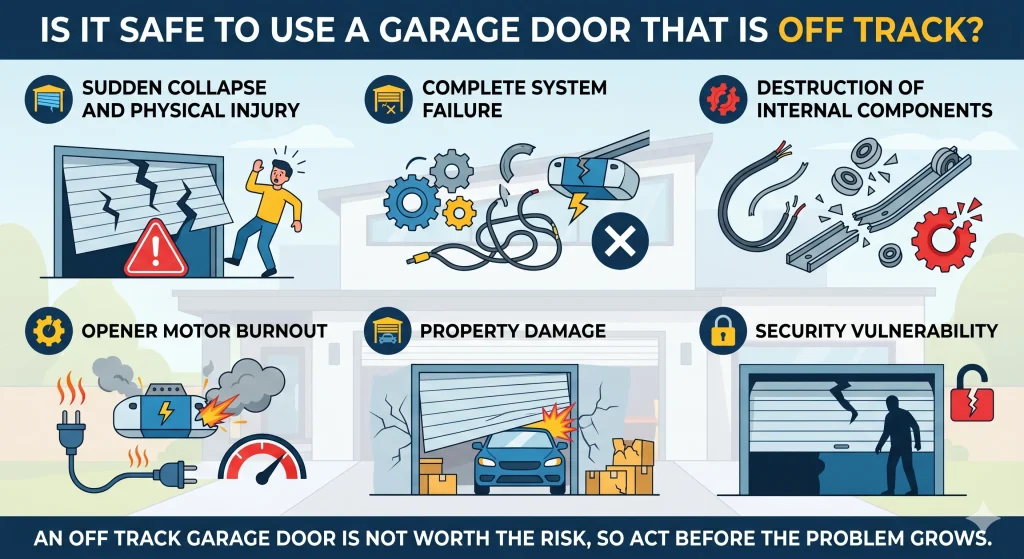
No, and the risks go far beyond a door that simply will not open or close properly. An off track garage door can collapse without warning, damage surrounding property, and leave your home exposed to unauthorized access.
Here are the specific risks that make an off track garage door dangerous:
Sudden Collapse and Physical Injury
An off track garage door has no reliable support holding it in place, and the full weight of the door becomes an immediate danger to anyone nearby.
Watch out for these collapse risks:
- Door panels can drop without warning during operation
- Children and pets near the door face the greatest risk of injury
- Vehicles parked inside can take the full impact of a collapsing door
- Manually catching the door puts hands and arms in direct danger
Stopping all operations immediately and calling for garage door repair is the only way to keep everyone in the area out of harm’s way.
Complete System Failure
Once the door loses track contact, every component begins to work against itself, and the entire door becomes inoperable.
Risks of complete system failure include:
- The door is getting stuck halfway with no way to move it in either direction
- The opener motor is burning out from fighting a door that it cannot move
- Manual operation is becoming impossible as the door binds against the frame
- Full loss of garage access, leaving the opening exposed and unsecured
Every cycle attempted before calling for help adds more strain to already-compromised parts.
Destruction of Internal Components
Forced movement on a misaligned door puts extreme tension on every connected part, and each attempt accelerates the damage already in progress.
Running an off track door puts these components at risk:
- Garage door springs snap from carrying an uneven load during each cycle
- Rollers crack or shatter under pressure from a bent or misaligned track
- Cables fray and snap as the imbalance shifts more load onto one side
- Track sections warp further with every attempted operation
Parts that were still functional at the start of the problem may need full garage door replacement by the time a technician arrives.
Opener Motor Burnout
The garage door opener is calibrated for a balanced door, and running it against an off track door puts the motor under strain it was never engineered to handle.
Motor burnout puts the opener at risk in these ways:
- The motor overheats from engaging against a door that it cannot move
- The drive belt or chain wears out prematurely from added resistance
- Circuit boards inside the opener fail from repeated failed operation cycles
- The opener stops responding entirely, cutting off all automated garage access
Motor burnout from an off track door puts enough strain on the system that garage door opener repair becomes necessary before the unit can function again.
Property Damage
An off track garage door creates conditions where the surrounding property takes the hit, and the damage depends on how long the problem is left unaddressed.
Leaving the door off track puts property at risk in these ways:
- Stored items near the entrance get crushed when the door drops or drags
- The door frame warps or cracks as the misaligned door presses against it
- Vehicles parked nearby get scratched or dented when contact is made
- The garage floor gets damaged from the door dragging along the surface
The longer the door stays off track, the wider the damage spreads across the structure.
Security Vulnerability
A garage door that cannot fully close leaves the property exposed, and gaps from an off track door create an open entry point for unauthorized access.
An off track door creates these security risks:
- Visible gaps along the sides or bottom make the garage accessible from outside
- The door lock disengages because the door is not flush against the frame
- Intruders can reach the interior door connecting the garage to the home
- Pests and animals enter through the opening and cause additional problems inside
Restoring the door to its proper position is the only way to fully close that security vulnerability.
What to Do Immediately If Your Garage Door Goes Off Track
A garage door off track requires immediate action because each minute it remains in that condition adds more stress to the cables, springs, and opener.
Here are the immediate steps to take:
- Stop all door operation and do not press the opener button again
- Pull the emergency release cord to disconnect the door from the automatic opener
- Keep everyone away from the door area until a professional assesses the situation
- Do a visual inspection of the tracks, rollers, and cables from a safe distance
- Contact a professional for garage door off track repair before attempting anything further
Taking these basic steps immediately limits the risk of injury and prevents the problem from spreading to other parts of the system.
Why You Should Never Attempt to Fix an Off Track Garage Door Yourself
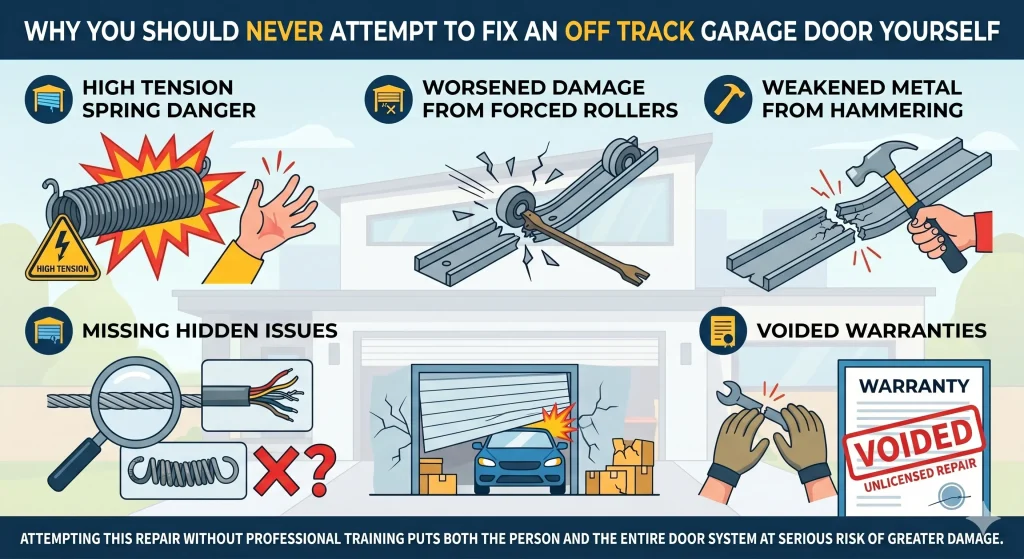
Fixing a garage door off track is not a weekend project because the system operates under extreme tension, which can cause serious injury without proper training.
Here are the reasons why DIY fixes on an off track garage door put you at risk:
- Garage door springs store enough tension to cause severe injury if mishandled
- Forcing rollers back into the track without addressing the root cause will make the problem worse
- Using a rubber mallet on bent tracks weakens the metal and leads to faster deterioration
- Missing hidden damage, like frayed cables or worn springs, means the door will fail again
- Most manufacturer warranties are voided the moment an unlicensed person attempts a repair
Attempting this repair without professional training puts both the person and the entire door system at serious risk of greater damage.
Why Leaving It to a Professional Is Always the Better Choice

A professional garage door technician is trained to assess the entire system and identify damage that is not immediately visible during a basic inspection.
Here is what a professional brings to every off track garage door repair:
- Expert diagnosis of both the visible problem and any underlying issues that caused it
- Specialized tools for adjusting and replacing springs, cables, and tracks without risk of injury
- Manufacturer-approved replacement parts that match the exact specifications of the door
- A full assessment of the garage door opener to confirm that the motor was not damaged
- Warranty protection that stays intact when repairs are handled by a licensed technician
To explore how professional repair compares to handling it yourself and what each option actually involves, read our guide on Garage Door Off Track: DIY or Call a Pro?, which breaks down exactly what to expect from the repair process.
An Off Track Garage Door Is Not Worth the Risk, So Act Before the Problem Grows
A garage door off track is a legitimate safety hazard that puts everyone who uses the garage at risk with every single attempt. The dangers range from sudden collapse and opener motor burnout to security vulnerabilities that leave your entire property exposed and accessible to unauthorized entry.
Dodson Garage Door has been helping homeowners across Xenia, OH restore their doors with professional residential garage door services. Our team is ready to handle everything from track realignment to full system assessments, so contact us or give us a call today and let us take it from there.
Frequently Asked Questions
How do I know if my garage door is fully off track or just misaligned?
A fully off track door will have rollers that have completely left the track, while a misaligned door will still have rollers in the track but sitting at an uneven angle. Both conditions require professional attention before the door is operated again.
Can an off track garage door affect the structural integrity of the garage?
Yes, a door that drags or falls can crack the door frame, damage the wall brackets, and warp the track mounting points over time. The longer it stays in that condition, the more the surrounding structure takes the impact.
How long does a professional garage door off track repair usually take?
Most standard repairs are completed within one to two hours, but the actual time depends on the number of components affected and the extent of the damage. Cases involving broken springs, snapped cables, or severely bent tracks will require additional time to complete properly.
Is it possible for a garage door to go off track silently without any obvious signs?
Yes, gradual misalignment can develop without loud noises or visible damage in the early stages. Regular inspections are the only reliable way to catch the problem before it becomes a bigger issue.
What should I do if my garage door goes off track at night or on a weekend?
Leave the door in its current position and avoid operating it until help arrives. Many garage door off track near me searches lead to companies that offer emergency repair services outside of regular business hours.
Does the type of garage door affect how quickly it goes off track?
Yes, heavier doors put more stress on the rollers and tracks, so they are more likely to derail sooner as components wear. Lighter single-panel doors are generally less prone to sudden derailment but are not immune to track issues.
How does garage door off track repair cost vary between minor and major damage?
Garage door off track repair cost depends on the number of components affected, the type of door, and whether parts like springs, cables, or rollers need replacement. Minor realignment jobs are generally less involved than repairs that require full track replacement or spring work.
Can an off track garage door cause the opener to lose its programming?
No, going off track does not affect the opener programming since the issue is mechanical rather than electrical. However, the strain placed on the motor during repeated failed operation attempts can affect how the opener performs once the door is realigned.
What happens if only one roller comes off the track?
Even a single roller off the track is enough to throw the entire door out of balance and place uneven pressure on the remaining rollers, cables, and springs. Operating the door with one roller out of position will cause additional components to fail.