

A garage door off track is not just an inconvenience because it puts your entire household routine on hold and raises an immediate question about what to do next. The answer depends on the extent of the damage and whether the situation calls for a quick garage door track repair or a full professional intervention.
Getting that decision wrong can lead to further damage, voided warranties, and safety risks that no homeowner wants to deal with. This guide covers the causes, warning signs, and key factors that tell you exactly when to pick up your tools and when to pick up the phone.
What Causes a Garage Door to Go Off Track?
A garage door leaves its track when the rollers lose their guided path, and the cause is almost always something that built up gradually over time or happened in a single moment of impact that shifted the entire system out of position.
Here are the most common causes:
- Vehicle collision or a light bump that knocks rollers out of the metal tracks
- Worn-out rollers that can no longer maintain smooth movement along the track
- Bent tracks that force rollers out of position and create alignment issues
- Loose bolts and brackets that allow the track to shift gradually over time
- Broken garage door torsion springs that disrupt door balance and strain the entire system
- Dirt and debris buildup that creates friction and blocks smooth operation
- Temperature fluctuations that cause metal tracks to expand, contract, and loosen hardware
To understand how these causes affect the system and what signs appear before the damage worsens, read our guide on Garage Door Off Track: Top Causes and Safe Next Steps, which covers every major trigger homeowners should know.
What Can Go Wrong When a Garage Door Off Track Is Handled Incorrectly
Handling an off track garage door without the right knowledge or tools turns a manageable repair into a safety hazard and a costly mistake.
Here is what can go wrong:
- Garage door springs under extreme tension can snap and cause serious injury
- Forcing the door damages the door opener, cables, and hardware all at once
- Wrong tools on bent tracks make the damage worse instead of better
- Pulling on cables without proper knowledge can snap components instantly
- Skipping the root cause brings the garage door problem back faster
- DIY fixes on warrantied parts can void coverage and trigger full replacement costs
Touching the wrong part before understanding the full picture turns a small issue into a big problem that costs far more than a professional garage door repair ever would.
How to Assess the Severity of Your Off Track Garage Door
Knowing the severity of an off track garage door is what separates a situation that can wait from one that needs a professional right away.
Here are the steps to assess the damage:
- Look at the rollers and check how many are out of the track
- Inspect the tracks for visible bends, breaks, or sections pulling away from the wall
- Listen for grinding, scraping, or strange noises when the door is stationary
- Check whether the door is resting fully on the ground or hanging at an angle
- Look for visible gaps between the rollers and the track surface
- Test the door opener for unusual resistance or failure to complete a full cycle
To spot the early red flags before the damage reaches this point, read our guide on Warning Signs Your Garage Door Is Off Track, which breaks down every signal homeowners should watch for.
How to Decide Between DIY and Calling a Pro for a Garage Door Off Track
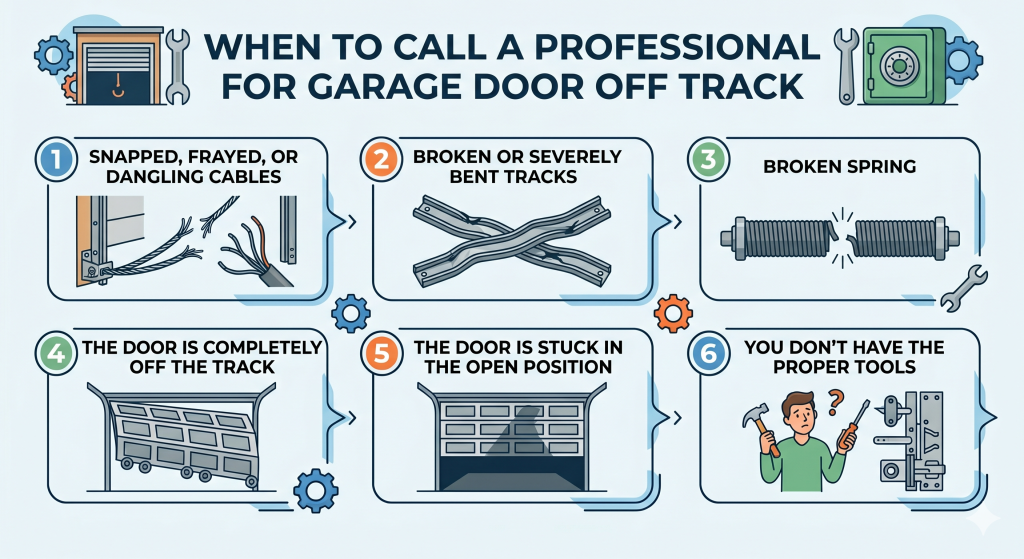
When to Call a Professional
Snapped, Frayed, or Dangling Cables
Snapped or frayed cables mean the door has lost a critical part of its support system and can shift or drop without warning.
Watch for these cable warning signs:
- One side of the door hangs lower while the other side stays raised
- Cables appear loose, coiled, or bunched near the bottom bracket
- Visible wire strands are separated, frayed, or snapped along the cable
- The door moves unevenly or jerks to one side during operation
Garage door cable repair is strictly a job for a licensed technician, and touching it without proper training puts the door system and everyone nearby at immediate risk.
Broken or Severely Bent Tracks
Bent or broken tracks remove the guided path the door needs, forcing every moving part to work against the damage with every cycle.
Look for these track damage signs:
- Visible curves, kinks, or twists that prevent the rollers from traveling smoothly
- Track sections that have pulled away from the wall and left gaps in the mounting
- Rollers skipping or jumping out of position during every open and close cycle
- Loud grinding or scraping sounds that get worse with each use
Bent tracks cannot be restored to factory alignment by hand, and pushing the door through damaged tracks also wears down the rollers, cables, and opener.
Broken Spring
A broken garage door spring is one of the most dangerous situations a homeowner can face, and no repair attempt should be made without a licensed technician on site.
Recognize these broken spring indicators:
- A loud bang from the garage followed by a sudden door failure
- Door sitting heavily on the ground and is impossible to lift manually
- Visible gap in the torsion spring coil above the door
- One side of the door lifts higher than the other during operation
Garage door springs operate under extreme tension, and any contact without the right tools and training puts everyone nearby at immediate risk.
The Door Is Completely Off the Track
When most or all rollers have left the track, the entire door loses its structural integrity and becomes unpredictable in weight and movement.
Identify these complete off track signs:
- Multiple rollers are visibly outside the track on one or both sides
- Door leaning or tilting away from its normal vertical position
- The opener cannot engage the door through a normal cycle
- Visible stress on cables and hardware from the uneven load
Repositioning a fully off track door requires professional equipment and trained technicians to handle the weight and guide everything back into proper alignment.
The Door Is Stuck in the Open Position
A door stuck in the open position poses an immediate security and property-damage risk, and the longer it remains unaddressed, the greater the risk.
Notice these open position danger signs:
- The door stopped mid-cycle and will not respond to the opener or wall button
- Cables appear slack or uneven when the door is raised
- The opener motor runs, but the door does not move in either direction
- Hardware around the track mounting points shows visible stress
Leaving the door open places the full weight of the system on components not designed for static loads, and sudden collapse can occur without warning.
You Don’t Have the Proper Tools
Attempting a garage door track repair without the correct tools causes more damage to the system than the original problem ever did.
Watch for these tool-related mistakes:
- Using a standard hammer instead of specialized track alignment tools
- Relying on basic pliers when vice grips and clamps are required
- Forcing bent sections by hand instead of using proper straightening equipment
- Attempting spring adjustments without a winding bar set
Working with inadequate tools transfers stress to surrounding components, turning a localized repair into a much larger job.
When to DIY
One or Two Rollers Popped Out of the Top of the Vertical Track
One or two rollers slipping out of the top section of the vertical track is one of the few situations where a careful and prepared homeowner can step in.
Check these conditions before attempting the repair:
- The door is fully resting on the ground with no part suspended
- Only one or two rollers have come out of the top vertical section
- Track shows no visible bends, cracks, or sections pulling away
- A second person is available to stabilize the door during the repair
Confirming every condition on this list before picking up a tool helps keep a minor roller issue within a manageable scope.
The Track Is Only Slightly Misaligned Due to a Minor Bump
Slight misalignment from a minor impact falls within the range of careful DIY work when the damage is genuinely surface-level.
Look for these minor misalignment signs:
- The track is only slightly off its mounting position, with no visible bending
- Rollers still sit inside the track and move without skipping
- The door opens and closes with only minor resistance or slight rubbing
- No cables, springs, or opener components are visibly affected
Careful work with the right tools and a helper on hand is what keeps a minor adjustment within a manageable scope.
The Door Is Safely on the Ground and Not Hanging
Ground contact confirms the door is in its most stable position, and verifying that stability is the first step before any hands-on assessment begins.
Verify these ground position conditions:
- The door sits flat and evenly across the full width of the floor
- No part of the door is suspended, tilted, or leaning away from the frame
- The emergency release cord is accessible and ready to disconnect the opener
- Cables on both sides are evenly tensioned with no slack or fraying visible
Ground position alone does not make a repair advisable, and checking every item on this list before touching anything helps keep the situation from getting worse.
You Feel Confident, Have Help, and Have the Correct Tools
Confidence, a capable helper, and the correct tools must all be present at the same time before any DIY garage door repair attempt is made.
Meet these minimum requirements before starting:
- A second person is present and positioned to stabilize the door throughout
- Pliers, vice grips, and a rubber mallet are on hand before work begins
- The automatic opener is fully disconnected using the emergency release cord
- Full understanding of the repair process is confirmed before touching anything
Having all three conditions in place reduces the risk of injury and additional damage to a level that makes a minor DIY attempt reasonable for a prepared homeowner.
Steps for Safe Handling While Waiting for a Professional
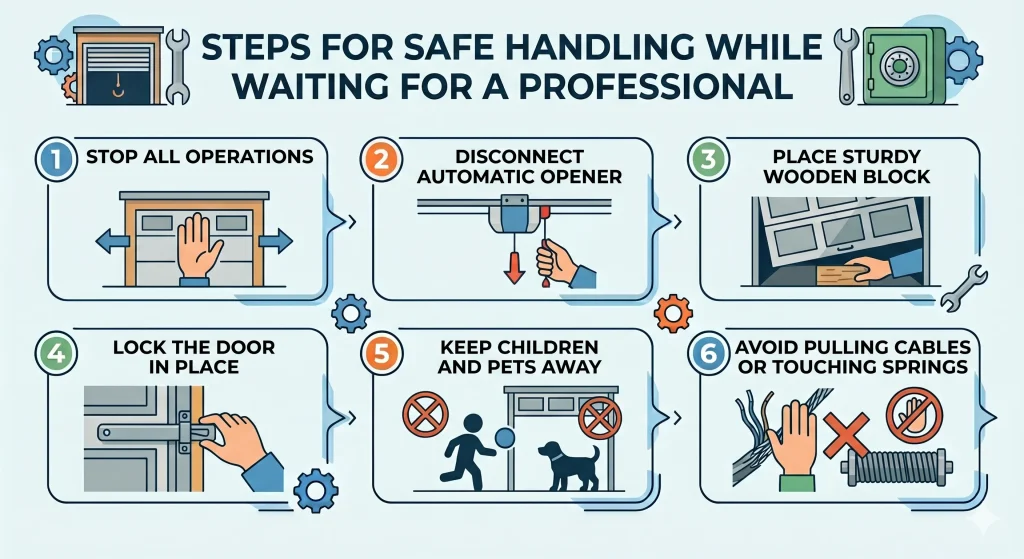
Taking the right steps while waiting for a technician prevents further damage and keeps everyone in the household protected until professional help arrives.
Here are the steps to follow:
- Stop all operations immediately and do not attempt to open or close the door
- Disconnect the automatic opener using the emergency release cord
- Place a sturdy wooden block under the door if it is partially open
- Lock the door in place using the manual lock if it is accessible
- Keep children and pets completely away from the garage until repairs are done
- Avoid pulling on cables, touching springs, or hammering any part of the track
To learn more about the specific dangers of operating a door in this condition, read our guide on Is a Garage Door Off Track Safe to Use?, which covers every risk homeowners need to know before making any decisions.
Why Professional Off Track Garage Door Repair Is Always the Smarter Choice
Professional garage door repair delivers results that protect the door, the home, and everyone who uses it every single day.
Here is why calling a pro is always the smarter choice:
- Licensed technicians bring years of experience and the right tools to every repair
- Full system inspection catches hidden damage that a homeowner’s visual check would miss
- Repairs follow garage door installation standards that make the fix last longer
- Warranty coverage stays intact when a certified garage door technician handles the work
- Accurate diagnosis ensures the correct replacement parts are used the first time
- Post-repair testing confirms smooth operation before the technician leaves the property
Trusting a trained professional with an off track garage door guarantees the repair is done correctly, completely, and without creating new problems in the process.
Know When to DIY and When to Call a Pro for Your Garage Door Off Track

Knowing when to handle it yourself and when to step back is the decision that protects your home, your family, and your entire garage door system from unnecessary risk. A garage door off track is never a problem to ignore, and hiring the right professional is always the move that saves time, money, and stress.
Dodson Garage Door is your local expert for off track garage door repair, broken spring replacements, and complete garage door repair service in Xenia, OH. Our team brings years of experience and the right tools to every job, so contact us or give us a call today to get your garage door back on track the right way.
Frequently Asked Questions
How many times can a garage door go off track before the entire system needs to be evaluated?
There is no set number, but recurring off track issues are a strong signal that an underlying problem, like worn rollers, weak springs, or deteriorating tracks, has not been fully resolved and needs a comprehensive professional assessment.
Does calling a pro for an off track garage door take longer than doing it yourself?
No, it does not. A licensed technician completes the repair faster and more accurately than a homeowner attempt because they arrive with the right tools, replacement parts, and hands-on experience for the specific type of damage.
How do I find a trusted technician for an off track garage door repair?
Searching for garage door off track near me is a practical starting point, and filtering results by licensed, insured, and locally reviewed technicians ensures you hire someone with verified residential garage door experience in your area.
Can an off track garage door affect how the opener performs over time?
Yes, it can. When the door loses its guided path, the opener runs into the misalignment's resistance, which strains the motor and can cause it to malfunction or fail if the problem is not addressed promptly.
Is garage door off track repair cost higher when a professional is called versus a DIY attempt?
Not necessarily. The garage door off track repair cost of a failed DIY attempt almost always exceeds the cost of calling a professional from the start because additional components are damaged during the attempt.
How do technicians decide whether to repair or replace the tracks on an off track garage door?
Technicians assess the extent of the bending, warping, and wall damage before making that call. Tracks with minor misalignment are adjusted and secured back in place, while tracks that are severely bent, cracked, or pulling away from the wall are replaced entirely.
Does the age of a garage door affect how a technician approaches an off track repair?
Yes, it does. Older doors may have worn components that need to be replaced alongside the track repair, and a technician will factor the overall condition of the system into the repair plan to avoid repeat issues.
What should a homeowner tell the technician when calling for an off track garage door repair?
Describing what the door looks like, how it sounds, what triggered the problem, and whether the opener is still running gives the technician enough information to arrive prepared with the right tools and replacement parts.
Can an off track garage door be prevented from happening again after a professional repair?
Yes, it can. Following the technician's maintenance recommendations after the repair, including regular lubrication, hardware checks, and periodic professional inspections, significantly reduces the chance of the problem recurring.