

A garage door that stops opening is not automatically safe to keep using, since the actual risk depends entirely on what caused it to stop. Sensor problems are usually low risk, but a spring, cable, or track problem can turn a routine garage door repair into a genuine safety hazard.
Forcing the door before the exact cause has been properly confirmed is one of the most common ways a minor issue can lead to a serious injury. This guide identifies the real dangers associated with each likely cause and clearly states what to do instead while waiting for a proper repair.
Key Takeaways
- A broken spring under high tension can snap suddenly and cause serious injury without warning
- Snapped cables can whip through the air or cause the garage door to start to fall unexpectedly
- Forcing a door off its track risks a full collapse onto whatever sits underneath
- An overworked opener motor can overheat or spark, creating a real fire hazard
- Standing or parking underneath a stuck door always carries real risk, regardless of the cause
What Happens If You Force a Garage Door That Won’t Open?
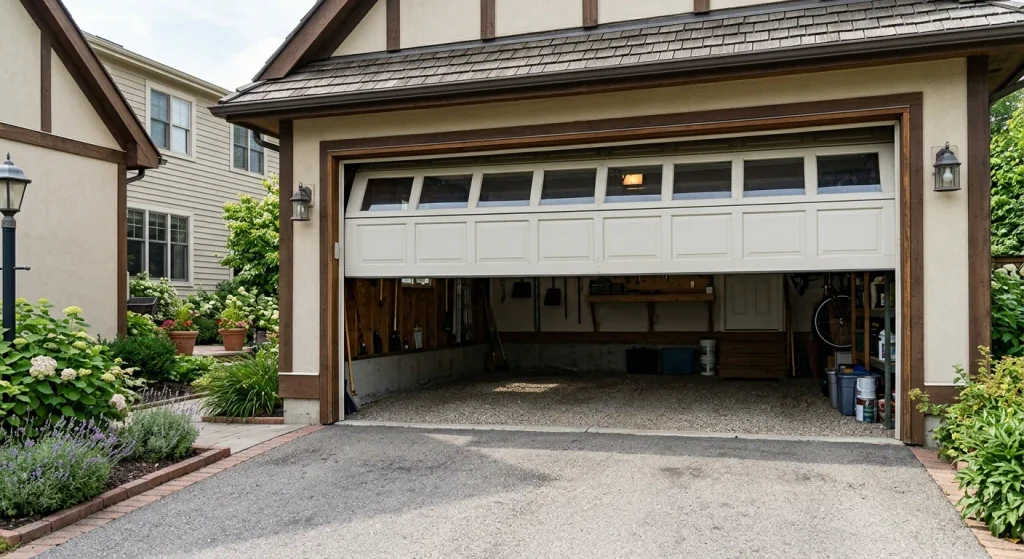
| Danger | What Triggers It | Why It’s Dangerous |
| Spring failure | Old, rusted, or over-tensioned springs | Can snap and whip violently, causing serious injury |
| Cable failure | Frayed or overloaded lift cables | Can snap and let the door fall without warning |
| Roller or pulley failure | Worn, seized, or damaged rollers | Can cause the door to bind, tilt, or come off the track |
| Track misalignment | Bent, dented, or shifted tracks | Can cause the door to jump the track and collapse |
| Motor or electrical fault | Repeated strain on the garage door opener | Can overheat, spark, or create a fire hazard |
| Lack of clearance | A door stuck partway open | Can drop suddenly onto anyone underneath |
Broken Springs
The counterbalance springs carry nearly all of the door’s total heavy weight during every single open and close cycle.
Here’s why a failing spring is dangerous:
- An old or corroded spring under spring tension can snap without warning
- A snapped spring can whip violently around the garage door systems in an instant
- Nearby objects, shelving, or vehicles can be struck or damaged
- The sudden release of tension can cause serious injury to anyone close by
- A door with a broken spring becomes far heavier and harder to control, especially on older openers
Broken extension springs should never be handled without training, since the tension stored inside them stays dangerous even when the door looks still.
Snapped Cables
Heavy-duty steel cables work directly alongside the springs to help lift and guide the door safely through every full cycle.
These signs show why a cable failure is dangerous:
- A frayed cable can snap suddenly under much strain
- A snapped cable can whip through the air unpredictably
- The door can fall suddenly once cable support is lost
- Anyone standing nearby risks being struck by the cable itself
- A partially frayed cable often fails without much additional warning
To recognize a frayed cable before it fails completely, read our guide on How to Tell What’s Causing a Garage Door to Stop Opening, which walks through this exact warning sign in full detail.
Worn Rollers and Pulley Failure
Worn rollers and a slowly failing pulley system can cause the entire garage door to bind or tilt quite unexpectedly.
Watch for these dangers tied to roller or pulley failure:
- A seized roller can cause the door to jam mid-cycle without warning
- A tilted door can place uneven, dangerous strain on the remaining hardware
- Once it jumps free of the guide track, the door can crash down
- Nearby vehicles or people can be struck by a falling section
- A garage door lubricant applied too late often cannot prevent this failure, especially with little buildup noticed beforehand
A garage door roller repair usually resolves this safely, since worn components should never be forced back into place.
Misaligned or Bent Tracks
Bent or misaligned metal tracks force the motor to work against constant, uneven resistance, well past its normal travel limits.
These are the real dangers of a misaligned track:
- Continued force can cause the door to pop completely free of the track
- A door that leaves the track can fall in an unpredictable direction
- Sharp, bent metal parts and metal brackets pose a cutting or serious injury risk
- The door can collapse onto a vehicle or person underneath
- Forcing the opener against this resistance can also damage the motor
A garage door track repair is never a safe DIY task and should always be handled by a trained professional once the track has visibly shifted.
Overworked Motor or Electrical Faults
Repeated stalling puts real strain on the motor gears and the electrical components inside the garage door opener, often signaling opener motor fatigue.
Here’s why an overworked motor becomes a real hazard:
- Continued strain can cause the opener motor to overheat quickly
- Overheating components can spark under the wrong conditions
- A spark near stored items in the garage creates a fire hazard
- Burning smells, an unusual opener hum, or visible smoke should never be ignored
- Minor internal errors left unresolved often lead to bigger logic board function faults
A professional safety inspection should always be scheduled immediately if any burning smell, sparking, or visible smoke is noticed.
Lack of Clearance
A door left stuck partway up for any length of time can suddenly and unexpectedly drop due to gravity alone or even a small nearby vibration.
These are the risks tied to limited clearance:
- A stuck door can release and fall with no additional warning
- Anyone walking underneath faces a direct, serious injury risk
- Vehicles parked underneath can suffer real property damage
- Children or pets are especially vulnerable to a sudden drop
- The door’s full load weight makes any impact underneath dangerous
To identify exactly why a door stalls at this dangerous halfway point, read our guide on Why Does Garage Door Stop When Opening? 7 Common Causes, which breaks down every cause behind this specific stopping pattern.
What to Do Instead of Forcing the Door Open
A few simple, practical precautions can help keep everyone safe while the actual cause is still being confirmed or repaired.
Here’s what to do instead of forcing the door open:
- Keep people, pets, and vehicles clear of the door’s full path
- Avoid manually pushing or pulling the door past its stuck point
- Turn off the opener at the circuit breaker if a burning smell is noticed
- Mark or block off the area underneath as a visible reminder
- Contact local professionals rather than attempting further damage control alone
To stop waiting and finally resolve the confirmed cause behind the stall, read our guide on 6 Ways to Fix a Garage Door That Stops When Opening, which walks through the exact repair steps for each one.
Treating a Stuck Garage Door as a Safety Priority
A garage door that won’t open is rarely just an inconvenience once a spring, cable, or track problem is behind it. Treating the situation with real caution from the start is what keeps a mechanical issue, and any incorrect setting behind it, from becoming a genuine safety incident.
Dodson Garage Door responds quickly to homeowners in Xenia, OH facing a garage door that has become unsafe to use on its own, with no hidden fees along the way. Contact us or give us a call right away, and let one of our trained technicians handle the repair in good hands from start to finish.
Frequently Asked Questions
Is it dangerous to manually push a garage door that has stopped opening?
Manually forcing the door can be dangerous if the issue is a spring, cable, or track problem rather than a simple sensor problem. Pushing past much resistance, especially near a limit switch, can trigger a sudden failure with very little warning.
Can a stuck garage door fall on its own without warning?
Yes, a door stuck partway open can suddenly drop due to gravity, a small vibration, or a failed spring or cable, even with routine maintenance. This is why the area underneath should always be kept clear until the cause is confirmed, without relying on the release cord to move it.
What should I do if my garage door opener smells like it’s burning?
Turn off power to the opener at the circuit breaker immediately and avoid using the door until it has received a professional replacement check or inspection. A burning smell often signals opener motor fatigue, an incorrect opener’s settings configuration, or an electrical fault that needs professional attention.
Is a sensor-related stop as dangerous as a spring-related stop?
No, an issue with the safety sensors or garage door sensors is usually low risk and likely needs only a small fix, even as the garage door starts moving again. A spring, cable, or track issue poses far greater risk and should be treated with far greater caution.
Can a garage door track failure cause the door to fall completely?
Yes, a bent or misaligned track can allow the door to jump free entirely, especially if the opener continues to force it forward past its force limits. This can result in the door collapsing onto anything or anyone underneath, well past a properly balanced door state.
How can I tell if a cable is close to snapping?
Visible fraying, looseness, or slack near the spring area are the clearest signs a cable may be close to failing, sometimes under much pressure from daily use. A cable in this condition should never be tested further, even with the emergency release cord nearby, and should be treated as an irregular operation hazard.
Should children or pets be kept away from a garage door that won’t open?
Yes, keeping children and pets away from a stuck door is one of the simplest and most important safety steps to take, even on modern openers. A door under this kind of strain can fail without any clear warning signs, regardless of humidity or other external conditions.
Is it safe to keep trying the remote if the door won’t respond?
Trying the remote a few times is generally safe if nothing else seems unusual about the door or opener settings, including its opener’s internal memory. Repeated attempts accompanied by grinding noises or visible strain should be treated as signs of internal opener wear and grounds for immediate stop.
When does a stuck garage door become an emergency?
A stuck door becomes an emergency if there’s a burning smell, visible smoke, sparking, or any sign the garage door counterbalance or overall garage door balance could fail suddenly. In any of these situations, calling for garage door repair services and cutting power right away is the safest response, without any minor glitches left unresolved.