

A broken garage door spring throws the entire door out of balance, and the weight the spring once carried now has nothing to support it. Manually opening a garage door in this condition is possible, but it requires the right knowledge, the right tools, and at least two people to do it without causing serious harm.
Garage door torsion springs store and release tension with each cycle, and when one fails, the door’s full weight becomes unsupported instantly. Attempting a manual opening without understanding what that means can lead to injury, damage to garage door components, and repairs that could have been avoided entirely.
Is It Safe to Open a Garage Door With Broken Springs?

Garage door springs carry the full weight of the door during every open-and-close cycle, and when one breaks, that load transfers directly to whoever attempts to move it, making every part of the process physically demanding and potentially dangerous.
Attempting a manual open with broken springs comes with these risks:
- Broken springs release stored high-tension energy instantly
- A door weighing up to 300 pounds drops freely without spring support
- A torsion spring break can send metal components flying
- Extension springs can snap outward without a safety cable in place
- Lifting without springs significantly increases the risk of severe injury
To understand every risk factor before touching a door with broken springs, read our guide on Is It Safe to Use a Garage Door With Broken Springs?, which covers what homeowners need to evaluate before attempting any movement.
What to Prepare Before Attempting a Manual Open
Getting the right items together before touching the garage door reduces the chance of injury and keeps the process as controlled as possible.
What to have ready before starting:
- Vice grips or heavy-duty locking pliers to clamp the tracks once the door is lifted
- Wooden blocks or step ladders to place under the door as backup support
- Work gloves and safety glasses to protect against sharp edges and broken spring fragments
- Steel-toed boots to protect feet from the door’s weight if it slips
- At least two capable adults to share the lifting load on each side of the door
Skipping any of these preparations increases the risk of injury and makes the entire manual opening process significantly harder to control.
How to Manually Open a Garage Door With Broken Springs
Step 1 — Lower the Door Completely
Never attempt a manual open with the door raised or partially open, as a broken spring leaves nothing to hold that weight in place.
Before lifting, confirm the door is fully closed:
- A suspended door with no spring support can drop violently without warning
- Guiding a partially open door down requires hands on the sides, never the bottom panel
- No one should stand underneath the door during this step
- Door must sit flush against the floor before moving forward
Starting from any position other than fully closed puts everyone involved at immediate risk of injury.
Step 2 — Pull the Emergency Release
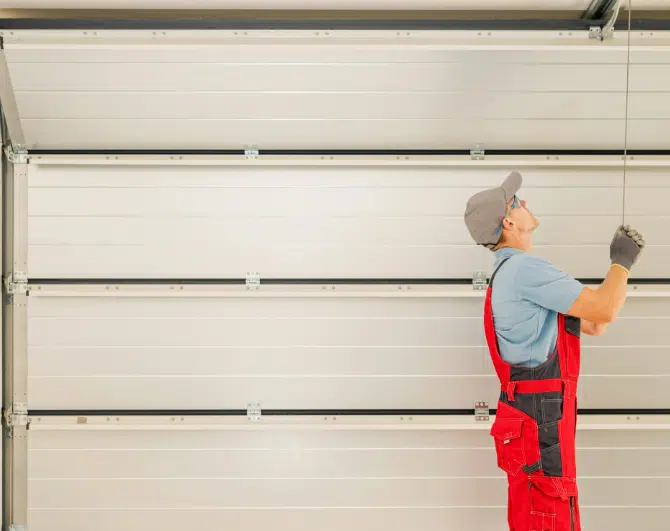
Disconnecting the automatic opener allows the door to move freely without the motor resisting the lift.
To disengage correctly:
- Locate the red cord hanging from the overhead trolley on the opener rail
- Pull the cord firmly downward to disconnect the trolley from the carriage
- Manual mode is only active after the cord has been fully pulled
- Reconnection only happens after a professional completes the broken garage door spring repair
Skipping this step forces the opener motor to resist the manual lift, which adds unnecessary strain to the entire process.
Step 3 — Enlist Help and Lift
Lifting a garage door without functioning springs is a two-person minimum task, and the door’s weight makes solo attempts genuinely dangerous.
Proper lifting technique matters at every point:
- Position one person on each side of the door at the bottom panel
- Bend at the knees and keep the back upright before initiating the lift
- Lift slowly and evenly to prevent the door from tilting or binding against the tracks
- Maintain verbal communication between helpers throughout the entire lift
Uneven lifting shifts the door’s weight to one side and puts immediate stress on the tracks and rollers.
Step 4 — Secure the Door
Once lifted, a garage door with broken springs will not stay open without physical support holding it in place.
Locking the door in the open position requires two layers of support:
- Clamp vice grips onto the vertical tracks just below the bottom rollers on both sides
- Test the clamps by slightly releasing hand pressure before fully letting go
- Place wooden blocks or step ladders under both ends of the door as backup
- Backup support must be tall enough to keep the door at a functional height
Releasing the door without confirmed support on both sides puts everyone in the immediate area at risk.
Step 5 — Add Back-Up Support
Clamps alone are not enough when the full door’s weight is pressing down without any spring tension to offset it.
Backup support must be positioned carefully:
- Place sturdy objects, such as wooden blocks, under both ends of the door
- Objects must sit flat and bear weight evenly on both sides of the garage door
- Unstable support objects must be replaced before trusting the door to stay open
- Double-check all support points before anyone walks underneath the door
Every support point must be confirmed before the area under the door is considered workable.
Safety Warnings and Best Practices During Manual Opening
Manual opening without functional garage door springs exposes everyone involved to risks that proper preparation and discipline can prevent.
Keeping the process controlled requires following these safety measures:
- Never pull the emergency release cord while the door is in a raised position
- Avoid using the garage door opener after the emergency release has been pulled
- Keep children and pets completely out of the garage before starting
- Do not rush the lift since sudden movements increase the risk of injury
- Stop immediately and call a professional garage door repair service if the door feels unmanageable at any point
Ignoring any of these safety measures turns a manageable situation into one that puts lives and property at serious risk.
What to Do After Manually Opening the Door
Successfully opening the door manually does not mean the situation is resolved, and every step taken afterward determines whether conditions remain controlled.
Keep the area protected with these measures:
- Leave all clamps and backup supports in place for as long as the door stays open
- Inform all household members not to touch the door or operate the opener
- Place a visible marker near the door controls to prevent accidental use
- Avoid parking vehicles directly under or in front of the door
- Schedule a garage door replacement assessment as soon as possible after a manual open
Treating the open door as a temporary, active hazard prevents a manageable situation from getting worse.
When to Leave Manual Opening to the Pros
Recognizing when a garage door condition is beyond a manual open is what keeps a manageable situation from turning dangerous.
Leave manual opening to a professional in these situations:
- Both springs have broken at the same time, making the door nearly impossible to lift
- The door has jumped off its tracks and is no longer aligned for a controlled lift
- The torsion tube or drum is visibly damaged, and risks collapse during the lift
- A safety cable has snapped on an extension spring setup
- The door is a heavier garage door style, such as solid wood or insulated steel, exceeding 300 pounds
To explore every option available after a spring failure, read our guide on Garage Door Springs Replacement: DIY or Hire a Pro?, which breaks down what homeowners need to weigh before deciding on repair or full replacement.
When to Consider Garage Door Spring Repair or Replacement

Manual operation is a temporary measure, and the condition of the springs determines whether repair or full replacement is the right path forward.
| Factor | Repair | Replacement |
| Number of broken springs | One spring broken on a two-spring system | Both springs broke at the same time |
| Frequency of failure | First-time break with no prior issues | Spring has broken more than once in a short period |
| Physical condition | Minor rust or slight wear on the coils | Visible gaps, severe rust, or flattened spring wire |
| Door performance | Slight imbalance that adjusts after service | Door hangs unevenly and does not respond to adjustment |
| Spring type | Current setup still supports the door’s weight | Older single-spring setup that no longer provides proper balance |
| Expected lifespan | Spring is within its normal service life | Spring has exceeded its cycle rating |
To evaluate every sign that points to spring failure before it becomes a larger problem, read our guide on How to Know If Garage Door Springs Need to Be Replaced, which walks through the indicators homeowners should monitor.
Manually Opening a Garage Door With Broken Springs Is Only the First Step
Knowing how to manually open a garage door with broken springs can be helpful in an emergency, but the process requires the right tools, proper preparation, and at least two people to do so safely. Professional garage door spring repair remains the only way to fully restore the system after a manual opening.
Dodson Garage Door serves homeowners across Xenia, OH, with accurate diagnostics, professional garage door spring replacement, and comprehensive inspections of garage door systems to restore smooth operation. Contact us or give us a call today and let our team handle everything from the initial assessment to the final safety check.
Frequently Asked Questions
Is it possible to manually open a garage door with broken springs from the outside?
Yes, but only if the exterior emergency release keyhole is accessible and functional. Pulling the release cable from outside disconnects the trolley, just as the interior cord does, allowing the door to be lifted manually.
What part of the garage door is most likely to get damaged during a manual open with broken springs?
The tracks and rollers absorb the most stress during a manual open without spring support. Uneven lifting places lateral pressure on the horizontal tracks, which can cause bending or misalignment, affecting how the door travels after repairs.
How do I know if the emergency release cord has been properly engaged before lifting?
A properly engaged release cord allows the door to move freely along the tracks without resistance from the opener carriage. If the door still feels like it is catching or binding against the opener mechanism, the cord may not have been pulled far enough to fully disconnect.
Can a garage door be manually opened if the cables are also broken?
No, a broken cable combined with a broken spring makes manual opening extremely dangerous and should not be attempted. Broken cables leave the door structurally unsupported on one or both sides, and any attempt to lift it manually risks a sudden and uncontrolled collapse.
How much weight does a person actually have to lift when manually opening a garage door with broken springs?
The full door weight ranges from 100 to 300 pounds, depending on the door's material and size. Without springs offsetting that load, every pound transfers directly to the people doing the lifting, which is why solo attempts are not viable.
Does the type of garage door material affect how difficult a manual open is with broken springs?
Yes, heavier doors, such as solid wood and insulated steel, make manual operation significantly more demanding than lighter aluminum or hollow steel doors. Knowing how to replace garage door springs on heavier door systems requires a professional, as spring specifications vary based on door weight.
Will manually opening the door with broken springs affect how the opener works after repairs?
No, manual operation does not permanently affect the opener as long as the trolley is properly reconnected after a professional comes to change out garage door springs. Attempting to run the opener before new springs are installed is what causes motor damage.
At what point does a manual open become impossible, regardless of how many people are helping?
Heavy lifting alone cannot compensate for a door that has derailed from its tracks or when multiple garage door components have failed beyond the springs. Professional help is the only viable option when the door is no longer moving properly along its track.
Does manually opening a garage door with broken springs void any service agreements with a garage door company?
No, manually operating the door in an emergency does not typically affect a service agreement. Repeatedly doing so without reporting the issue can complicate a technician's assessment of the overall damage.