

A garage door usually stops while opening because of a misaligned safety sensor, a weakened torsion spring, or an opener force setting that reacts too early to resistance. The fix often seems as simple as a quick reset or fresh batteries, but a proper garage door repair is usually what actually resolves it for good.
Repeated stopping rarely stays a minor inconvenience for long, since the same resistance behind it also wears down the motor, cables, or spring over time. This guide breaks down the seven causes behind the problem, how to tell which one applies, and when the issue has moved past a simple fix.
Key Takeaways
- An opener force sensitivity setting set too low is one of the most frequent reasons a door stalls partway through its cycle
- Dirty or misaligned garage door sensors will block the door from opening or closing as a built-in safety measure
- A worn torsion spring changes the garage door balance and makes the opener work harder than its motor was built for
- Frayed cables or worn rollers add resistance that mimics an opener problem even when the opener itself is fine
- A door that stops when opening should be treated as a signal to inspect the system, not just reset it
Early Signs a Garage Door Is Struggling to Open
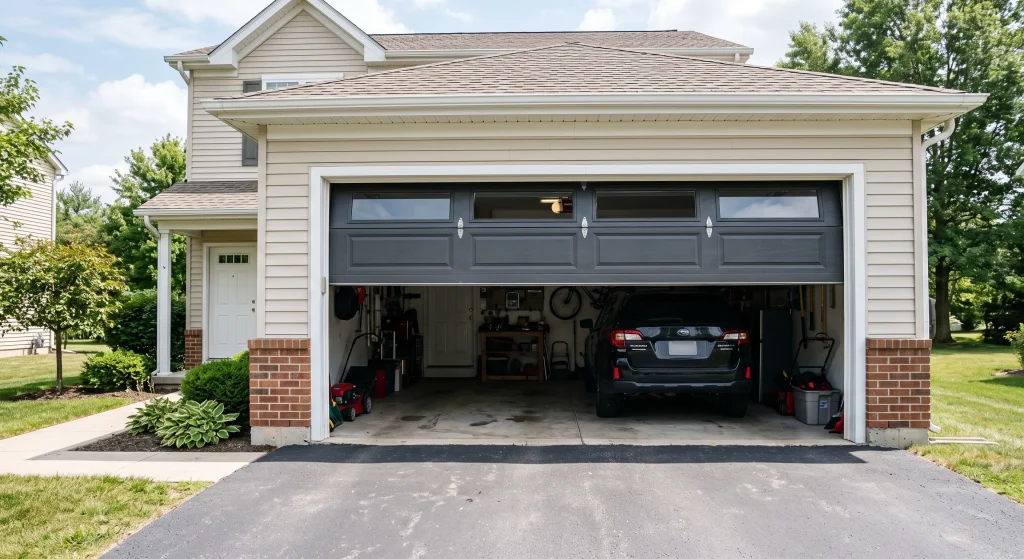
Recognizing the early warning signs of a stalling door can help catch a small issue before it becomes a garage door problem requiring a larger repair.
Here are the early signs a garage door is struggling to open:
- The opener hums without the door moving at all
- The door opens partway, hesitates, then continues or reverses
- Unusual grinding or straining noises come from the motor or track
- The door feels heavier than usual during a manual lift test
- Response time between the remote and when the garage door starts moving grows noticeably slower
To learn how each of these signs points to a specific cause, read our guide on How to Tell What’s Causing a Garage Door to Stop Opening, which matches each sign to the mechanical issue most likely behind it.
7 Common Causes Behind a Door That Won’t Finish Opening
Identifying which part of the garage door system is behind the problem starts with understanding the seven most common causes seen in the field.
| Cause | Typical Fix Difficulty | Common With |
| Misaligned safety sensors | Low, often a DIY fix | Any age of opener |
| Weakened torsion spring | High, professional only | Older or high-use doors |
| Force settings too low | Low to moderate | Modern openers |
| Frayed lift cable | High, professional only | Doors with high tension components |
| Door off track | Moderate to high | Doors after impact or heavy use |
| Opener motor fatigue | Moderate, may need professional replacement | Older openers |
| Worn rollers | Low to moderate | Doors with little buildup maintenance |
Misaligned or Blocked Safety Sensors
Garage door sensors sit near the bottom of each track and must have a clear, aligned line of sight to function correctly. An incorrect setting or a bumped sensor can trigger sensor issues, causing the door to stop mid-cycle.
A Broken or Weakened Torsion Spring
The garage door torsion spring carries most of the door’s weight, and one in poor condition puts much pressure on the opener motor. This added strain is a frequent reason the door stalls partway up before ever reaching the very top.
Opener Force Settings That Are Too Low
Modern openers include force-sensitive settings that stop the door when it senses excessive resistance. If this limit sits too low, even normal friction along the track can trigger an early, unnecessary stop.
A Frayed or Worn Lift Cable
The cables work together with the springs to guide the door’s movement along the track evenly. A cable that has started to fray can catch or slip, causing irregular operation that may appear to be an opener issue.
A Door Off Track or Obstructed on the Rail
Bent rollers, a shifted track, or a small obstruction can catch the door as it rises along the rail, sometimes requiring garage door track repair. This is especially true when much strain builds gradually and only appears partway through the cycle.
Opener Motor Fatigue or an Internal Logic Error
Older openers, or those nearing the end of their service life, often show internal wear. This includes a logic board function glitch tucked inside the opener’s internal memory that quietly affects normal travel limits.
Worn Rollers or Excess Resistance on the Track
Rollers that have flattened or dried out create steady drag along the track when fully loaded. That added resistance can be enough to trip the opener’s force limit before the door reaches the top.
A qualified technician usually rules out these seven causes in order of how often each shows up, and local professionals see the same door mechanics issues on repeat.
Is It Safe to Keep Operating a Door That Won’t Open Fully?
Knowing whether the door is still safe to keep using matters just as much as knowing what actually caused it to stop.
Treat the door as unsafe to keep using if any of the following apply:
- A suspected spring issue, since high tension springs can cause serious injury if they fail without warning
- The door has come off track, since forcing it further can cause property damage to metal parts and metal brackets
- The opener motor keeps straining, a sign of internal opener wear that worsens with use
- Anyone has had to force the door instead of using the red emergency release cord or emergency pull cord
- Small children or pets have access to the garage while the door is unreliable
To understand the specific risks associated with each cause and assess them safely, read our guide on Is It Safe to Use a Garage Door That Stops Opening?, which walks through every warning sign that calls for immediate caution.
How to Troubleshoot the Problem Before Calling for Help
A quick overview of a handful of basic checks can often confirm which of the seven causes is the most likely culprit before any repair is attempted.
Here is how to troubleshoot the problem before calling for help:
- Give both sensor lenses a quick wipe and confirm they are properly aligned
- Compare the opener’s force setting against the door’s actual weight
- Look over the lift cables for fraying that may call for a cable repair
- Lift the door manually with the opener disconnected to check for a properly balanced door
- Inspect the garage door counterbalance overall for signs of uneven strain
To move from diagnosis into the actual fix once the likely cause is identified, read our guide on 6 Ways to Fix a Garage Door That Stops When Opening, which covers each repair step in complete detail.
What to Do Next If Troubleshooting Doesn’t Fix the Stopping Issue
Knowing when to stop troubleshooting and call for professional help prevents a manageable repair from turning into something worse.
Consider professional attention needed if:
- The door still won’t open fully even after basic troubleshooting
- A suspected spring or cable issue, since both carry high tension
- No improvement after the opener has been reset or reprogrammed
- A stopping pattern that likely needs a hands-on look from a technician
- An older opener with a longer history of repeated problems
Scheduling a garage door replacement consultation, paired with a professional safety inspection, confirms the exact cause and prevents a costly rebuild later.
Permanently Resolve a Door That Stops When Opening With Professional Help
Letting a stalling door go unaddressed rarely saves time or money once the underlying cause is factored in. Every cause covered in this guide points to the same conclusion: catching the issue early and having it properly inspected keeps a small problem small and prevents further damage to the rest of the door’s mechanics.
Dodson Garage Door has been serving homeowners in Xenia, OH, with honest, reliable garage door repair services, no hidden fees, and a door left in good hands every time. Contact us or give us a call today, and free estimates make it easy to get started with one of our professional tools and a technician who knows exactly what to check.
Frequently Asked Questions
Can a bad spring cause the door to stop partway up?
Yes, a weakened or broken torsion spring shifts more of the door’s weight onto the opener motor than it was built to carry. Once that happens, the motor often strains and stops before the door reaches the top.
Is it normal for the opener to hum without the door moving?
This usually indicates the motor is trying to work against much resistance, often due to a spring, track, or roller issue. It is not a normal operating sound and should be checked with a professional inspection rather than ignored.
How do I know if my garage door opener force setting is wrong?
If the door stops or reverses at roughly the same point every time, the opener’s settings for force sensitivity are often too low for the door’s actual weight. Adjusting the force calibration is usually a simple fix, though it should be paired with a balance check first.
Why does my garage door work fine sometimes and stall other times?
Intermittent stalling often indicates a partially worn part, such as a frayed cable or a roller that catches only under certain conditions. Humid weather can also affect wood or metal parts enough to change how the door moves from one day to the next.
Should I keep trying to open the door manually if it stalls?
A single careful manual test to check for a fully balanced door is fine, but repeated forcing can bend metal brackets or further damage the track. If the door resists at all during a manual lift, treat that as a sign to stop and call for an inspection.
How much does it typically cost to fix a garage door that won’t open fully?
Cost depends heavily on the cause, since a sensor adjustment costs far less than replacing a spring or cable. A technician can usually give an accurate estimate after a short in-person inspection of the door and opener.
Can I reset the opener myself if the door keeps stopping?
Resetting the opener is safe to try and can sometimes resolve minor internal errors, minor glitches, or incorrect opener settings. It will not fix a mechanical issue like a worn spring or roller, so it is best treated as one step in a larger troubleshooting process.
Will an old garage door opener eventually stop working from wear alone?
Yes, older openers can develop motor fatigue over time, including wear that affects the opener’s internal memory, which governs opener force limits. This kind of wear tends to show up as gradually worsening performance rather than a sudden failure.
When should I stop troubleshooting and just call a professional?
Once basic checks like sensor alignment and force settings have been tried without improvement, further troubleshooting risks masking a bigger issue. At that point, a professional safety inspection is the fastest way to get a reliable long-term fix.