

A broken garage door spring does more than just stop the door from working properly, and the moment it fails, every part of the system that depends on it becomes a potential hazard. Without that one component supporting the full weight of the door, the entire garage door system becomes unstable, putting everyone nearby at risk.
Garage door torsion spring failures are one of the most common reasons a garage door becomes unsafe to operate, and the damage extends well beyond the spring itself. Knowing what happens when garage door springs fail is what separates a quick repair call from a preventable accident.
What Happens to a Garage Door When Springs Break?

A garage door loses its counterbalance the moment a spring breaks, and every component connected to that system begins absorbing stress that puts the entire door at risk of failure.
Here are the most common things that happen when garage door springs break:
- The door’s full weight shifts onto the opener, cables, and tracks with no counterbalance support
- The garage door opener strains under a load it was never built to carry
- Cables absorb tension beyond their limit and become a snapping hazard
- Rollers, hinges, and tracks bend or crack under the uneven pressure
- Every movement of the door becomes unpredictable and increasingly hazardous
To understand what to look for before a spring fails completely, read our guide on How to Know If Garage Door Springs Need to Be Replaced, which covers every indicator homeowners should watch for.
The Dangers of Using a Garage Door With Broken Springs
Crashing Doors
Without spring tension holding the door in place, the full weight of the door has nothing to keep it from dropping without warning.
Watch for these collapse risks:
- Full door weight drops with no spring tension left to hold it
- Manual lifting fails because the load exceeds what most people can manage
- Partial openings leave the door in an unstable position that can shift at any time
- Vehicles and anyone near the opening are exposed to a falling door
- Impact from a dropped door transfers an enormous force to the frame and structure
Losing spring tension leaves the door unsupported, and an uncontrolled drop can result in a full garage door replacement.
Damaged Openers
Forcing the garage door opener to run without working springs puts the motor under a level of strain it was never rated to handle.
Here is what happens to the opener when springs are broken:
- Motor windings overheat when forced to lift the full dead weight of the door
- Drive belts and chains snap under the excessive load on the opener mechanism
- Internal gears strip out when resistance exceeds the opener’s tolerance
- The operator bracket pulls away from the door under too much strain
- Continued operation accelerates wear on every moving part inside the opener
Pushing a garage door opener beyond its mechanical limits due to a broken spring often makes garage door opener repair unavoidable.
Whiplash and Snapped Cables
Cables running along the sides of the door carry controlled tension during normal operation, but a broken spring destroys that balance entirely.
Here is what happens to cables when springs fail:
- Cable tension spikes far beyond the load they were designed to carry
- Fraying starts at connection points where stress is highest
- A snapped cable recoils across the garage and can cause severe injury
- Broken cable ends can strike walls, vehicles, and anyone standing nearby
- Safety cables inside the spring coil can dislodge and become a secondary hazard
Snapped cables move faster than most people can react to, making professional garage door cable repair immediately necessary.
Further Hardware Failure
Operating a door without working springs forces every remaining component to absorb stress far outside its normal range.
Here is what happens to the surrounding hardware:
- Horizontal tracks bend when the door moves without proper balance
- Rollers crack and pop out when uneven weight shifts across the system
- Hinges loosen and break when the door travels at an angle
- Mounting brackets pull away from the wall under increased lateral force
- The torsion tube and metal shaft take on stress beyond their normal limits
Every part of the garage door system depends on spring tension, and without it, each component absorbs stress that accelerates wear across the board.
Who Is Most at Risk When Garage Door Springs Break?
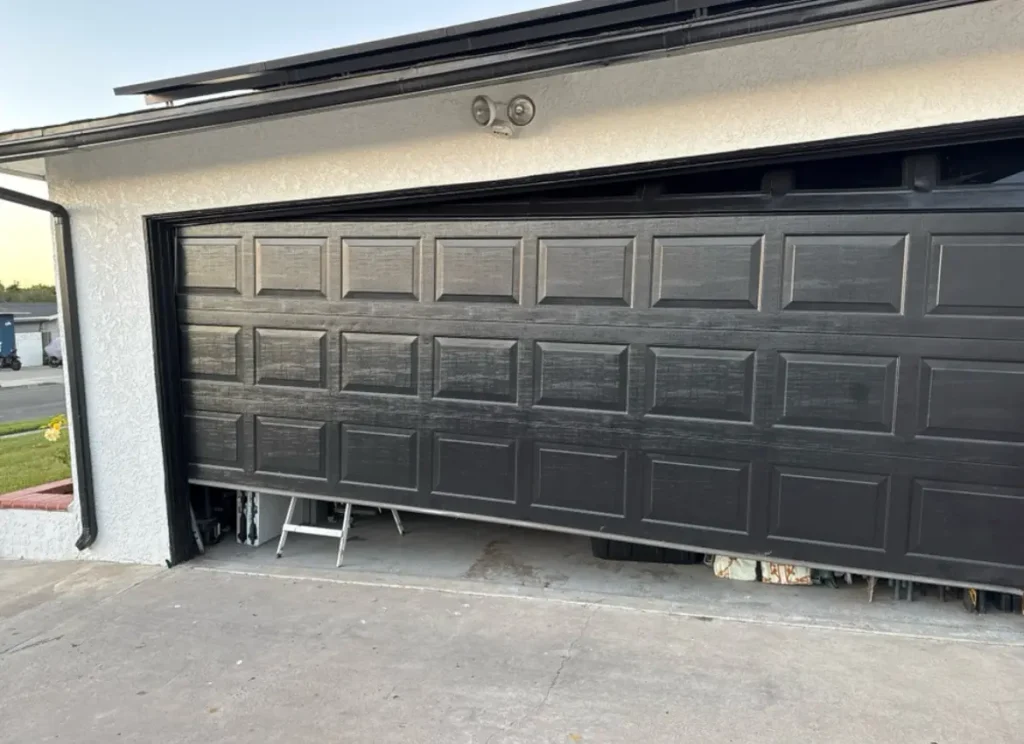
Broken garage door springs create an immediate hazard for everyone in the surrounding area, and some people face a much greater level of exposure than others.
Here is who is most at risk when garage door springs break:
- Children and pets near the garage who move unpredictably and without awareness of the danger
- Anyone standing underneath or near the door when it loses spring support
- Drivers pulling in or out of the garage when the door becomes unstable
- Homeowners who attempt to manually operate the door without knowing the spring has failed
- Anyone who tries to handle garage door spring repair without professional training
Knowing who faces the greatest risk makes it easier to keep the right people away from the garage until a professional completes the repair.
What to Do Instead of Using a Garage Door With Broken Springs
A broken spring changes everything about how the door should be handled, and taking the wrong steps can make an already dangerous situation far worse.
Here is what to do instead of using a garage door with broken springs:
- Stop all door use immediately and unplug the garage door opener
- Pull the red emergency release cord to disconnect the door from the opener
- Gather at least two people before attempting any manual movement
- Use vice grips on the track to hold the door open once lifted
- Contact a licensed professional to handle garage door spring replacement or change out garage door springs correctly
To walk through each step in detail, read our guide on How to Manually Open a Garage Door With Broken Springs, which covers all necessary precautions to move the door without putting anyone at risk.
Why Garage Door Spring Replacement Should Be Left to the Pros

Garage door spring replacement involves tension levels and mechanical complexity that make professional handling the only logical choice.
Here is why garage door spring replacement should always be left to the pros:
- Torsion springs store enormous energy that releases violently when mishandled
- Extension springs can snap back with enough force to cause severe injury
- Installing the wrong spring type throws the entire door off balance
- Calibrated winding bars and torque tools are not available at standard hardware stores
- A trained technician spots wear on cables, rollers, and tracks that most homeowners miss
To find out how professional repair compares to a DIY approach, read our guide on Garage Door Springs Replacement: DIY or Hire a Pro?, which breaks down everything a homeowner needs to know before making a decision.
A Garage Door With Broken Springs Is Never Safe to Use
Every garage door depends on properly functioning springs to operate without putting people and property at risk, and ignoring a broken spring makes every use of the door more dangerous. The risks covered in this article are real situations that no homeowner should take lightly when a professional repair is the straightforward solution.
Dodson Garage Door has the experience, tools, and expertise to restore every spring, cable, and component to proper working order for homeowners in Xenia, OH. Contact us or give us a call today, and let our team assess what the system needs to ensure everything is operating as it was built to.
Frequently Asked Questions
Can a garage door still move with a broken spring?
Yes, but it should never be operated. The door's weight has no counterbalance without spring support, and the opener and cables absorb the full load and can fail quickly under that strain.
How long do garage door springs typically last?
Most garage door springs are rated for around 10,000 cycles, which translates to roughly seven to nine years with regular maintenance. Frequency of use and proper upkeep play a big role in the overall life of your garage door springs.
Is it possible to replace just one spring instead of both?
Yes, but replacing both springs at the same time is always the stronger and more practical choice. When one spring breaks, the other has likely accumulated the same amount of wear and is already close to failure.
What happens to the garage door cables when a spring breaks?
Cables lose their proper tension the moment a spring breaks and begin absorbing loads they were never designed to carry under high tension. This puts them at immediate risk of fraying or snapping, which creates an additional hazard in the garage.
Can a broken garage door spring damage the garage door panels?
Yes, a door that drops or moves unevenly due to a broken spring can crack, dent, or warp the panels along the edges and bottom section. The impact from an uncontrolled drop is often enough to cause serious harm to the door structure and surrounding garage door components.
How do professionals safely handle garage door spring replacement?
Trained technicians use the right tools and calibrated equipment to manage spring tension safely throughout the replacement process. Knowing how to replace garage door springs correctly requires specialized knowledge and hands-on experience that most homeowners lack.
What is a safety cable, and why does it matter when a spring breaks?
A safety cable runs through the center of an extension spring, keeping it contained if it snaps. Without proper safety measures in place, a broken extension spring can fly across the garage and seriously injure anyone nearby.
Can the garage door frame be damaged when the springs break?
Yes, when the door drops without spring support, the impact transfers directly to the frame, tracks, and surrounding garage door components. Repeated stress from an unbalanced door opening puts the frame at risk of misalignment, which affects how the door sits in the opening.
How soon should broken garage door springs be repaired?
Broken garage door springs should be repaired as soon as they are discovered, and the door should not be used at all in the meantime. Getting professional help quickly keeps your garage door springs and all connected components in top condition before damage spreads further.
How do I know when my garage door springs are showing signs of wear?
Visible signs of wear include rust buildup, uneven coil spacing, and visible gaps along the spring. Scheduling a routine garage door service inspection at least once a year helps catch potential issues before they lead to a full spring failure.